
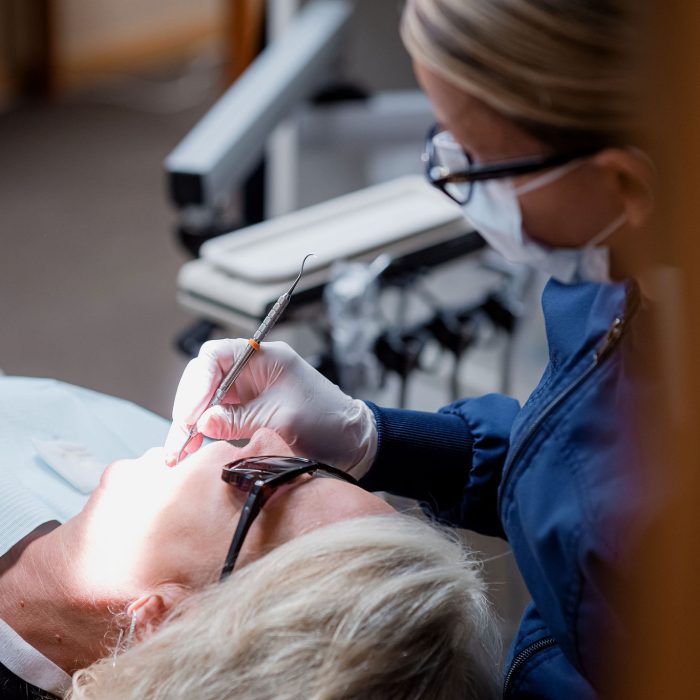
Periodontal disease is a bacterial infection of the gums and the bone that holds your teeth in place. Most people who have it do not know because, in its early stages, it does not hurt.
Periodontal therapy, commonly called a deep teeth cleaning, is how we stop it. It removes bacteria and hardened deposits from below the gumline, where a toothbrush and a routine cleaning cannot reach, and gives inflamed gum tissue the chance to heal and tighten back down.
At Peak Dental Arts, Dr. Amar Vagadia, DMD treats gum health as part of your overall health rather than a separate concern. Left alone, periodontal disease leads to receding gums, loose teeth and eventually tooth loss. If caught and managed, most patients can keep it under control for the rest of their lives.
Signs You May Have Gum Disease
Early gum disease is quiet. By the time it becomes uncomfortable, it has usually been present for a while. These are the things patients tend to notice first:
- Gums that bleed when you brush or floss
- Bad breath that does not go away with brushing
- Gums that look red, puffy or tender
- Teeth that appear longer as the gums pull back
- Sensitivity along the gumline
- Teeth that feel loose, or a bite that has changed
Bleeding is the one most people wave off. Healthy gums do not bleed when you brush them. If yours do, that is inflammation, and it is worth having looked at before it progresses.
Because the early stages are painless, gum disease is most often caught at a routine cleaning and exam, where we measure the depth of the pockets around each tooth and compare them against your previous visits.
Why Gum Health Affects Your Whole Body
Periodontal disease is an ongoing bacterial infection, and the inflammation it causes does not stay politely in your mouth. Researchers have spent two decades documenting how gum health connects to the rest of the body, and the links are consistent enough that physicians now ask about it.
Research in this area describes links rather than proven cause and effect. What is not in question is that periodontal disease is a chronic infection, that chronic infections place a burden on your body, and that this particular one is treatable. Taking care of your gums is one of the more straightforward things you can do for your overall health.
Diabetes. This connection is the best established, and it runs in both directions. High blood sugar makes gum infections harder to fight, and active gum inflammation makes blood sugar harder to control. For patients managing diabetes, treating gum disease is part of diabetes management.
Heart disease. People with periodontal disease have higher rates of cardiovascular disease. The relationship appears to run through chronic inflammation, which affects blood vessels throughout the body.
Pregnancy. Untreated gum disease during pregnancy has been associated with preterm birth and low birth weight, which is why periodontal care matters before and during pregnancy.
Respiratory illness and rheumatoid arthritis. Both show documented associations with periodontal disease, again tied to bacteria and chronic inflammation.
What Puts You at Risk
Some risk factors you can change, and some you cannot. Knowing which is which helps us build the right plan for you.
- Smoking and tobacco use. The single largest modifiable risk factor. Tobacco restricts blood flow to the gums, which both accelerates the disease and masks the bleeding that would otherwise warn you.
- Diabetes, particularly when blood sugar is not well controlled.
- Family history. Some people are genetically more susceptible and will develop gum disease despite good habits.
- Age. Risk accumulates over a lifetime of exposure.
- Dry mouth, often a side effect of common medications. Saliva is part of your natural defense, and less of it means more bacteria.
- Hormonal changes, including pregnancy and menopause, which can make gums more reactive.
- Home care and time between visits. The part most within your control.
Having a risk factor does not mean you will develop periodontal disease. It means we watch more carefully and may recommend coming in more often.
The Periodontal Therapy Process
Periodontal therapy involves a thorough cleaning called scaling and root planing, which removes plaque, tartar and bacteria from the tooth surfaces below the gumline and smooths the root so tissue can reattach.
The area is numbed first, so the appointment is comfortable. Depending on how much of your mouth is affected, treatment may be completed in one visit or divided across two. Dr. Vagadia and our hygienists will tell you which before you begin, so there are no surprises.
Remove Plaque
We remove surface plaque and tartar, as we would during a routine cleaning.
Scaling & Root Planing
We clean between your teeth and down below the gumline, removing the hardened deposits a regular cleaning cannot reach, and smooth the root surfaces so your gums can reattach to them.
Examine Pockets
We measure the pockets between your gums and teeth. These spaces are where bacteria collect, and their depth tells us how advanced the disease is and whether treatment is working.
Plan Your Follow-Up
Before you leave, we schedule your next visit and explain what your ongoing interval will be. Gum disease is managed over time rather than solved in one appointment.
ARESTIN® at Peak Dental Arts
Because periodontal infections can be stubborn, Peak Dental Arts uses ARESTIN to suppress the bacteria that cause them. ARESTIN, also called minocycline hydrochloride, is an antibiotic placed directly into infected pockets around your gums.
We apply it right after scaling and root planing, while the pockets are clean and the medication can reach the base of the infection. It works alongside the cleaning rather than replacing it, continuing to fight bacteria after you leave our office and go on with your day.
Delivering the antibiotic into the pocket itself means it goes where the infection is, rather than circulating through your whole body to get there.
Periodontal Maintenance:
Staying Ahead of Gum Disease
Periodontal disease is managed rather than cured. Treatment stops the infection and lets your gums heal, but the susceptibility stays with you, and bone that has already been lost does not grow back.
That is why patients who have been treated move to a maintenance schedule of every three to four months instead of the usual six. Bacteria repopulate the pockets on roughly that timeline, and coming in before they do is what keeps things from sliding backward.
At each visit, we clean below the gumline, re-measure your pockets and compare them against your history. Patients who stay on schedule tend to keep their teeth long-term.
Simple Habits That Keep Gums Healthy
What happens in our office is roughly half of your treatment. The rest happens at home, every day, between visits.
Brush twice a day, with attention to the gumline.
That junction between tooth and gum is where the problem starts, and it is the spot most people rush past.
Clean between your teeth daily.
Floss, a water flosser, or interdental brushes all work. The best one is the one you’ll actually use.
If you smoke, quitting changes your prognosis
more than anything else on this list. We will support you with it, and we will not lecture you about it.
If you have diabetes, keep your blood sugar managed.
Your gums and your glucose affect each other in both directions.
Keep your recall interval.
Rescheduling a maintenance visit by a few weeks is fine. Letting it slide to six months undoes the progress.
Dr. Vagadia will tell you which of these matter most in your particular case rather than handing you a generic list.
Protect Your Gums and Your Health
If your gums bleed, if your breath has not improved no matter what you try, or if it has been a while since anyone measured your gum health, that is worth an appointment.
We will examine your gums, show you the numbers, and tell you plainly where you stand. If you need treatment, we will explain why. If you do not, we will tell you that too.
Contact us today to schedule.
Frequently Asked Questions
A routine cleaning handles the tooth surfaces at and above the gumline. Periodontal therapy goes below it, to the root surfaces where bacteria have collected in pockets. A regular cleaning is preventive. This is treatment for an active infection.
The area is numbed beforehand, so you should feel pressure, not pain, during the appointment. Your gums may be sore for a day or two afterward, and your teeth may be temporarily sensitive to cold. Both settle quickly.
Often one or two, depending on how much of your mouth is involved. We will tell you what to expect before we begin rather than adding visits as we go.
Gum tissue that has already receded does not return on its own, and bone that has been lost does not regrow. What treatment does is stop the loss, resolve the inflammation and reduce pocket depth so the disease is no longer progressing. Catching it earlier means there is more to protect.
Most dental plans provide coverage for scaling and root planing, often at a different level than routine cleanings, and many cover periodontal maintenance visits. We will verify your specific benefits before treatment and go over what to expect. Our payments and insurance page has more detail.
The bacteria return to the pockets, inflammation resumes and the disease starts progressing again. This is the most common reason we see patients lose ground after a successful round of treatment.